
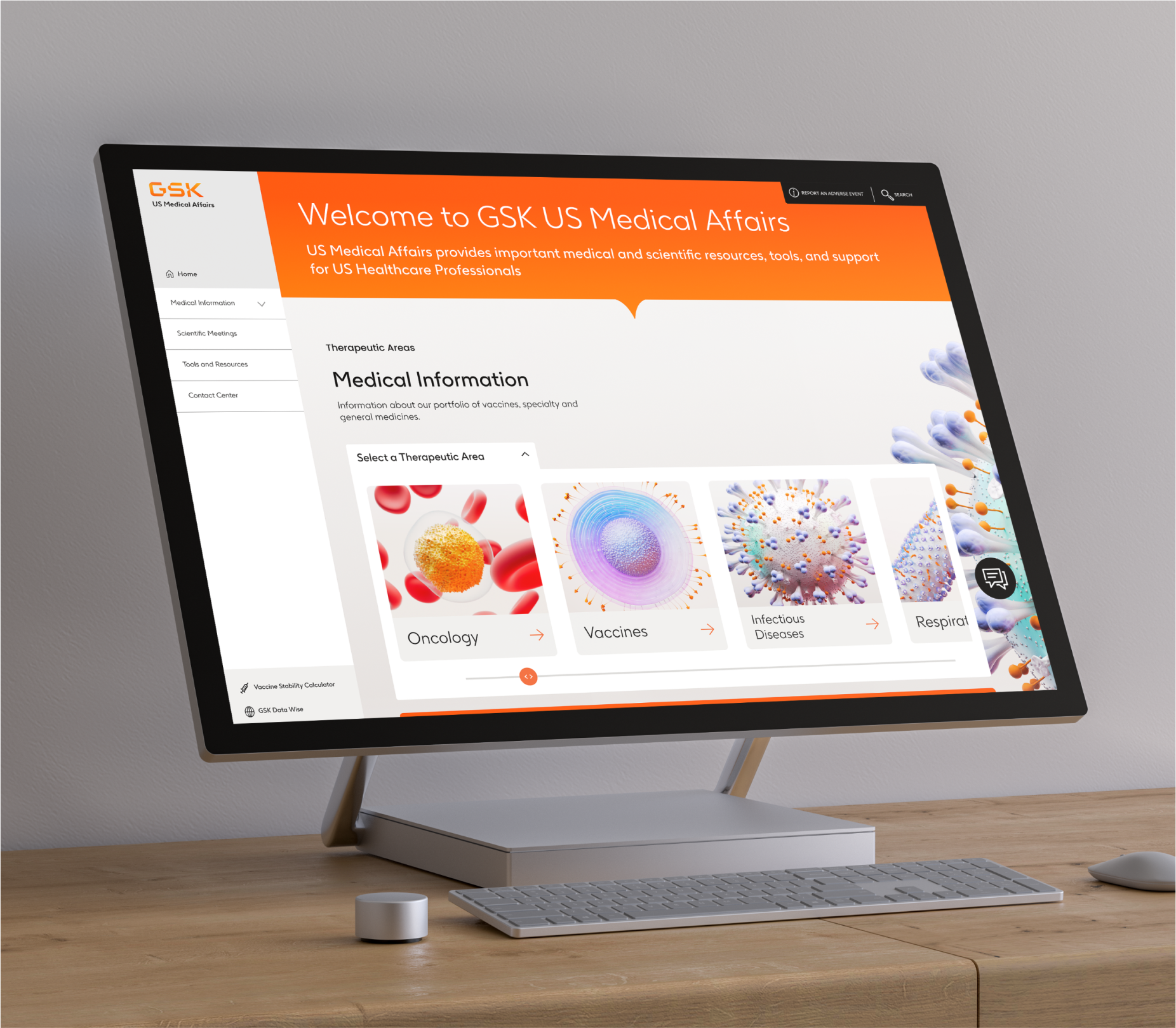


GSK Medical Affairs needed a full redesign and refresh. The site was extremely outdated, not working well and not a big audience using it. This was the biggest and longest project I have worked on, spanning about 2 years total from initial discovery to implementation. Our team touched on everything from interviews, user testing, to content discovery and implementation.
This project came right after working on a similar one for ViiV Medical Affairs. A Medical Affairs website is an experience built for medical personal for finding information about the pharmaceutical companies drugs, published articles, findings, and more. Without having much prior knowledge about medical or healthcare experiences, I learned a lot about the user groups day-to-day needs and how this web experience could play into that.

The challenge was simple, the website and experience as it was, was essentially unusable, not approachable, out-dated in design and content, and not creating any successful input for the company.
The site was meant to be a hub for medical professionals, something for them to use throughout their day, for reference on certain prescriptions or publications. In some cases it was a learning tool. It was also a place for the company to host, scientific calculators for medical staff, and other points of interest. It was essentially a medical database, but it wasn’t presenting as one.
Not to mention there were also other microsites that we needed to address, to work the content into the redesign so the team didn’t need to keep up any other websites for similar purposes.


Research took a vast amount of time and effort considering the scope of the project. We performed a number of stakeholder interviews, user interviews, competitive analysis, current site audits, etc.
This helped us set up the problem clearer, see what needed to be addressed, what users were saying, what other competitive sites were doing and more. It really helped us understand the scope of the task better.
I led all interview sessions and research, with oversight from the project manager and creative director.


This project focused highly on the architecture and flows. Before diving into wireframes we really needed to spend time reorganizing all the content and structure. This experience was a puzzle in itself. Reorganizing content can be a huge piece of the full design.
Throughout this phase, we had lots of review sessions, to make sure everyone was aligned on the direction of the architecture and overall navigation of the experience.
Once we had the architecture down, we moved into the wireframes.

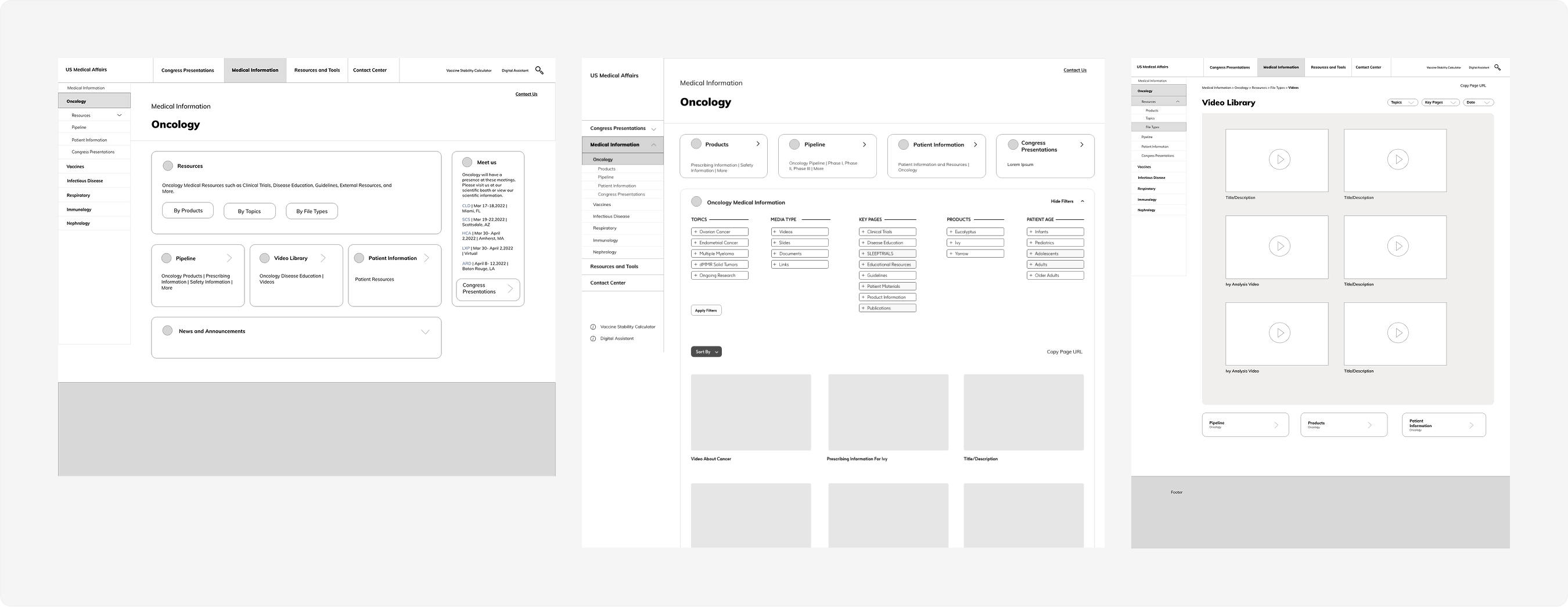
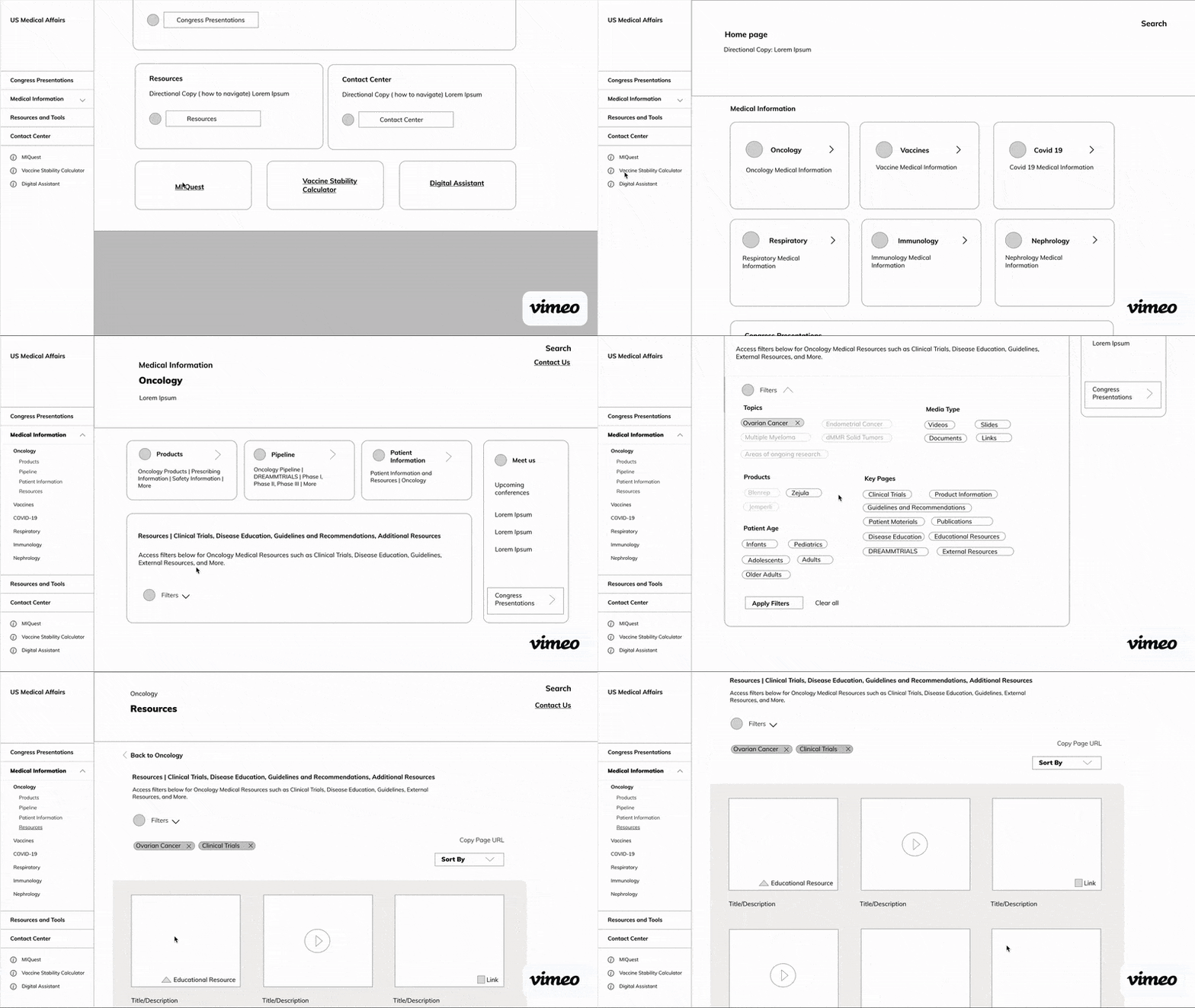
The next phase of this was diving into the wireframes. We took two directions. I led the prototyping and user testing for this phase.
The two solutions were;
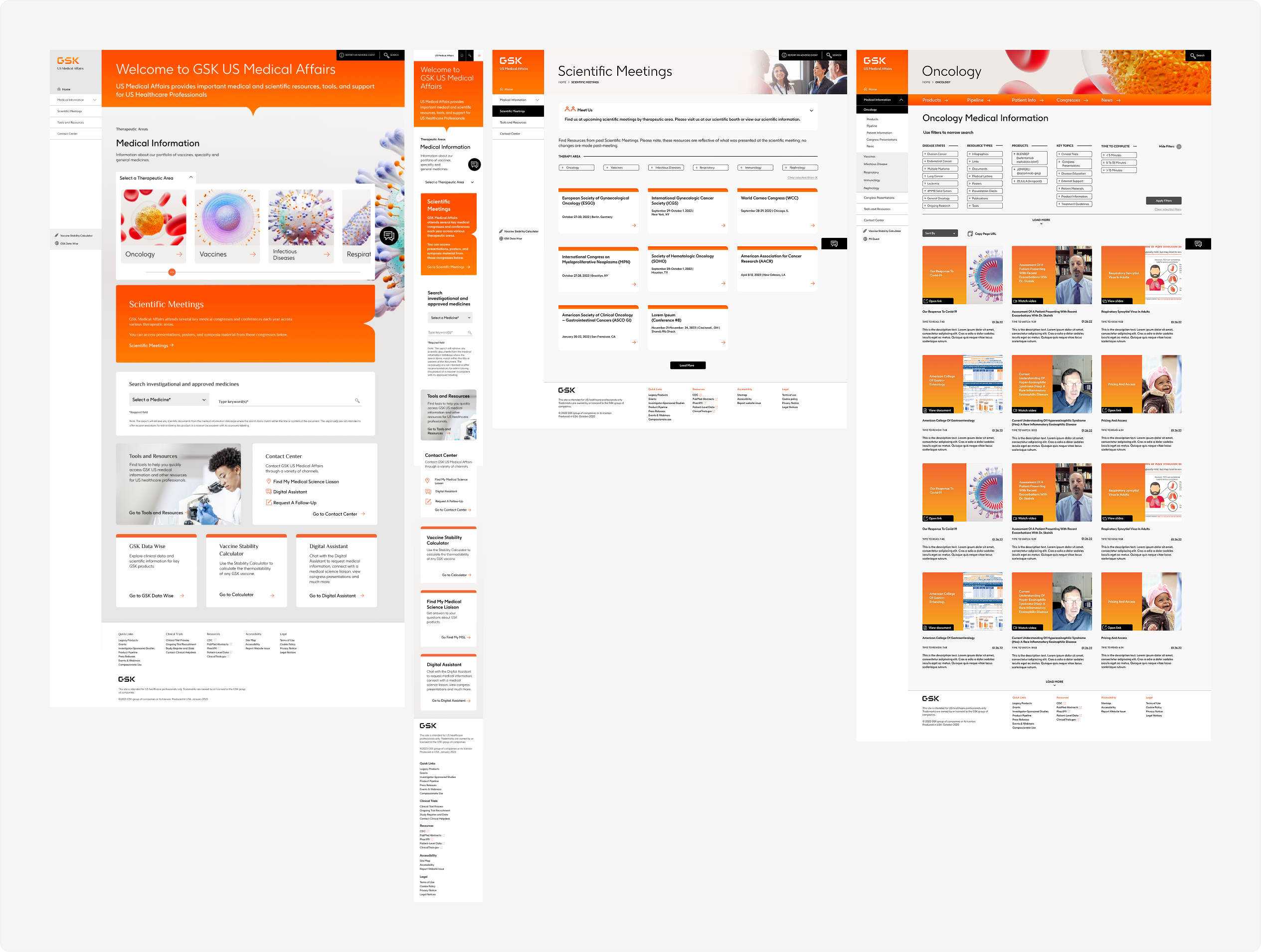
We also came up with 2 visual design approaches. One more bold and one cleaner option.
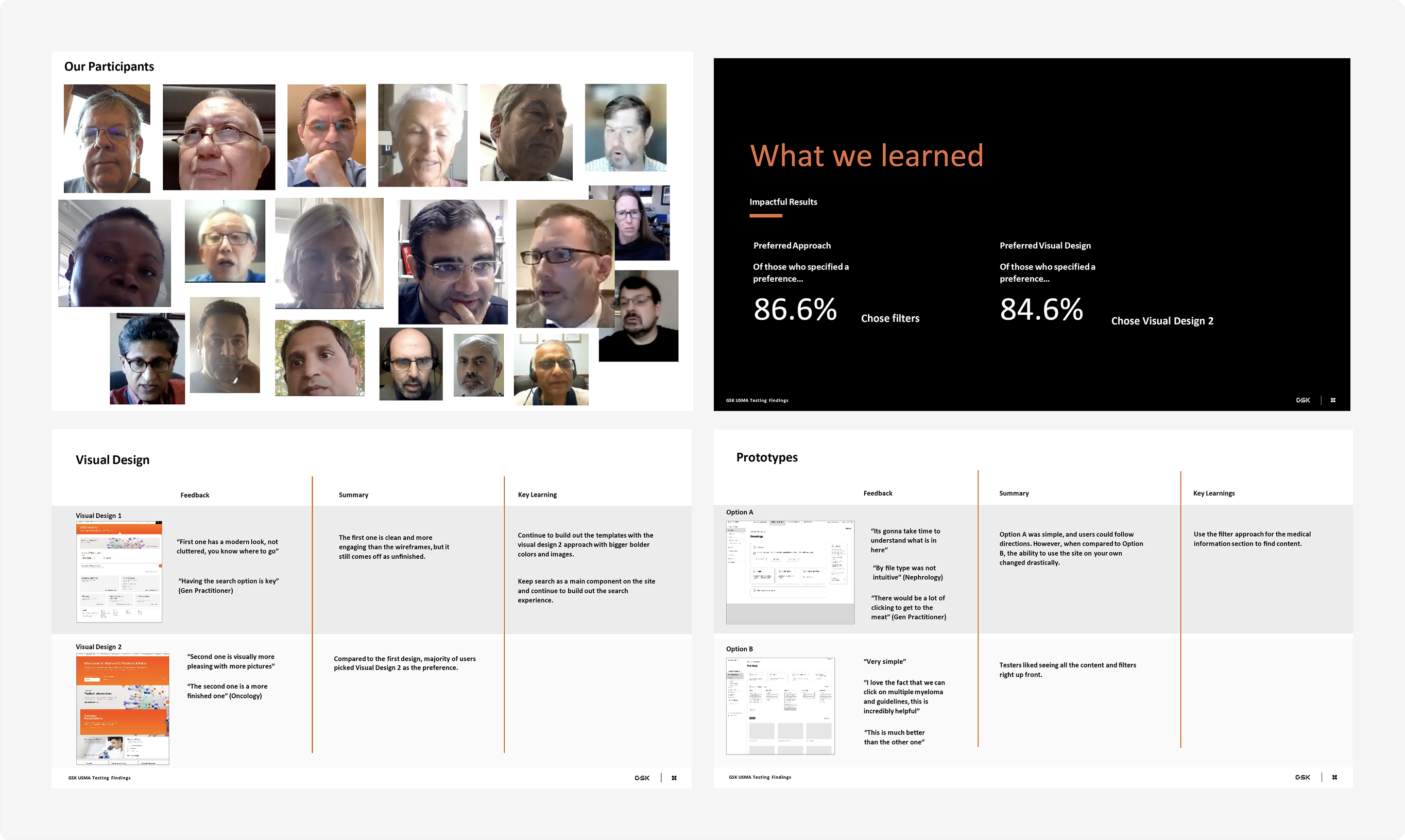
Through testing we learned that the team and user group preferred the filtering and “hub” experience and the more bold approach.

We did testing sessions with Medical Professionals, asking them to share their screen and follow various flows were we asking. Example of this was find information regarding the drug prescriptions within oncology. Following along to see if they could find the task.
Following user testing, we knew our direction and dove into it.


The final designs were influenced highly by the user testing sessions. 86.6% of the testers picked the filter approach, and 84.6% picked the bold approach to visual design.
From there we dove into designs, and built out the filter approach, logic, additional pages and visual designs.

This project was a lesson in consistency, reliability, and communication. Through an internal team of around 6 and the business team of 4, we had to work together to get this project moved along.