


Courage Music Partners, based in Nashville, needed a full redesign of their internal database platform, known as Yoda. As a record label services company, they relied on this system to track the buying, selling, and streaming of their catalog across multiple platforms, time zones, and countries. But the current setup was fragmented and outdated, leading to major inefficiencies in how teams worked with the data.
When we joined the project, the product manager had created wireframes in Excel, outlining the vision cell by cell. Our task was to take that vision and translate it into a functional, developer-ready web app design, something that could scale, streamline workflows, and reflect Courage’s evolving business model.


The biggest challenge wasn’t just untangling the data; it was navigating a pre-defined vision that left little room for design iteration. The data model was complex, with varying formats, sources, and logic tied to music rights tracking across different geographies. The product manager had a highly specific idea of how the tool should look and behave, which sometimes clashed with what was technically or experientially best.
Still, the need was clear: a functional, flexible internal tool that allowed the Courage team to search, connect, export, and analyze their catalog quickly and reliably.


We began by parsing the Excel “wireframes,” translating their structure into early Figma flows. Our focus was to preserve the logic that mattered while finding opportunities to clean up interactions, improve data visualization, and prioritize what users actually needed. We worked closely with the developers to understand what was technically possible and where we could streamline the front- and back-end handoff.
Despite early friction with the client, we ran multiple working sessions to align on core features and gain insight into real-world usage patterns. These conversations were key to grounding the project and turning a rigid starting point into a flexible product.

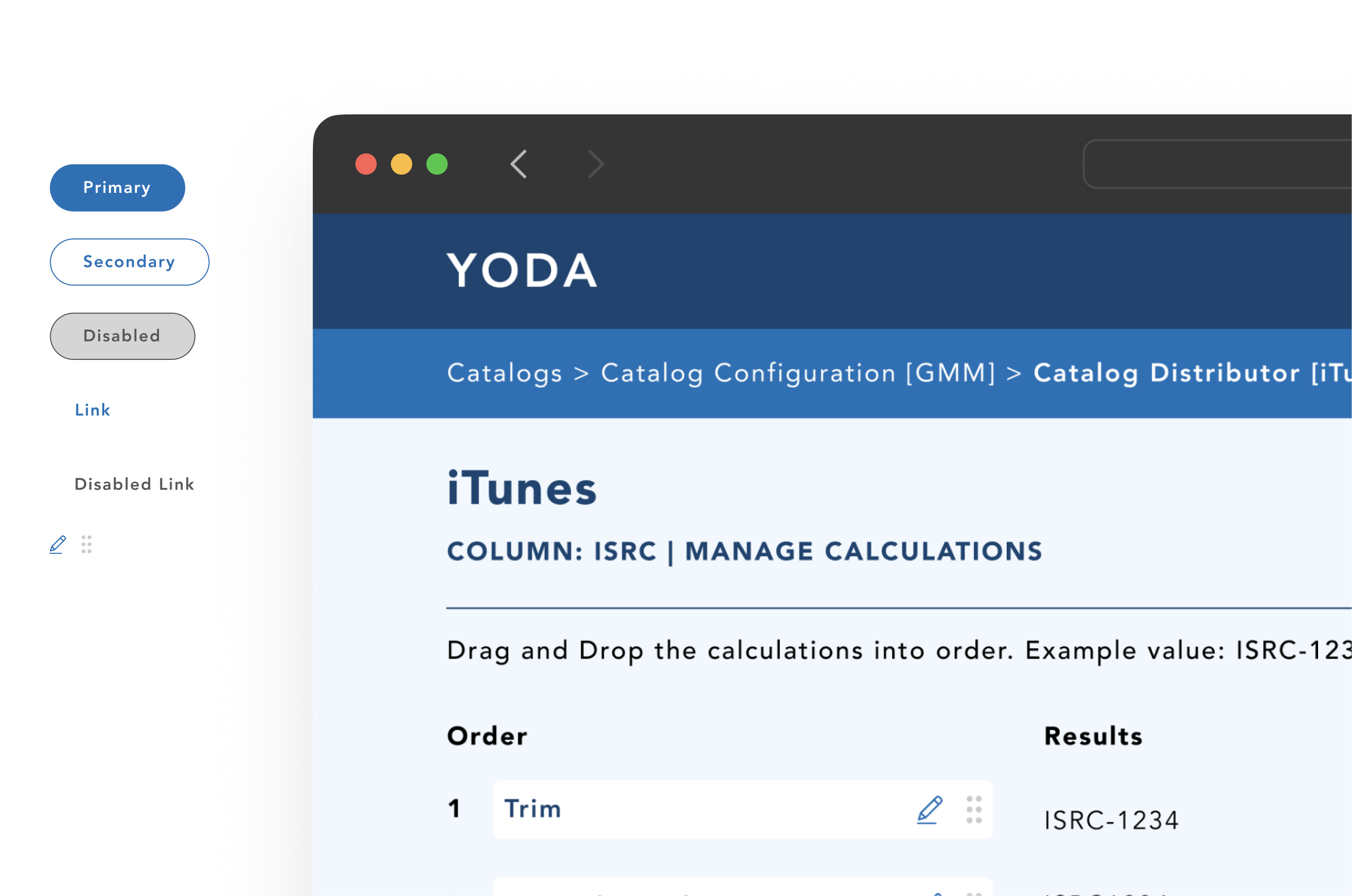
The platform was built as a desktop-first web app. We started with functionality, ensuring search, filter, and data mapping systems were intuitive and performant. We lightly refined their visual brand, building a basic design system around a limited palette, clean typography, and scalable UI components that could grow with the product.
We ran multiple feedback sessions with stakeholders and end users to validate our direction. These sessions helped us cut unnecessary features, add missing logic pathways, and create a more maintainable structure across different screens and flows.

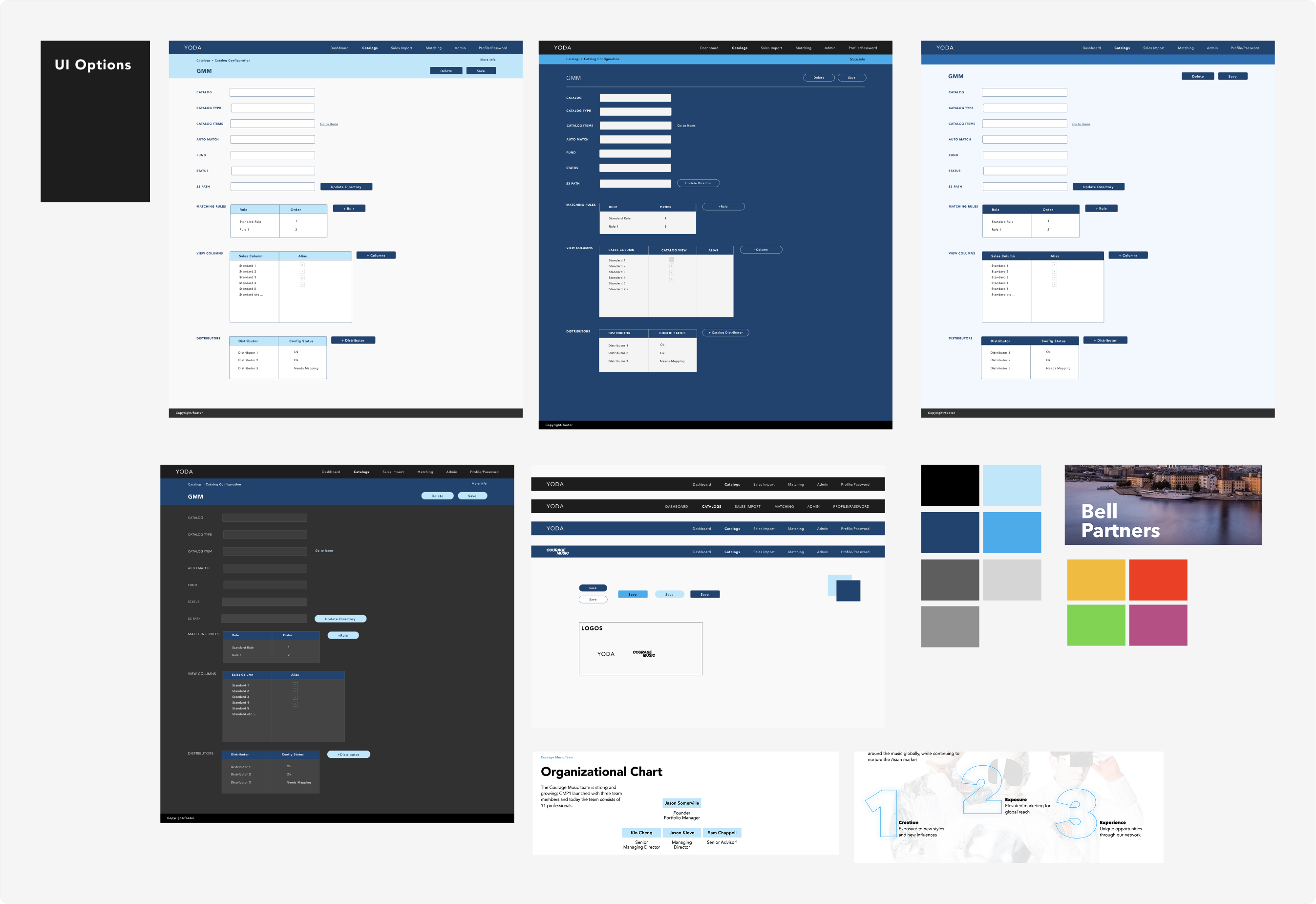
Spent a week or two on building out the visual design for the platform. This was happening at the same time as our wireframes. Once we were done with 1 flow, we were building it out in the new visual design. Our iterations of the design are here in the image.

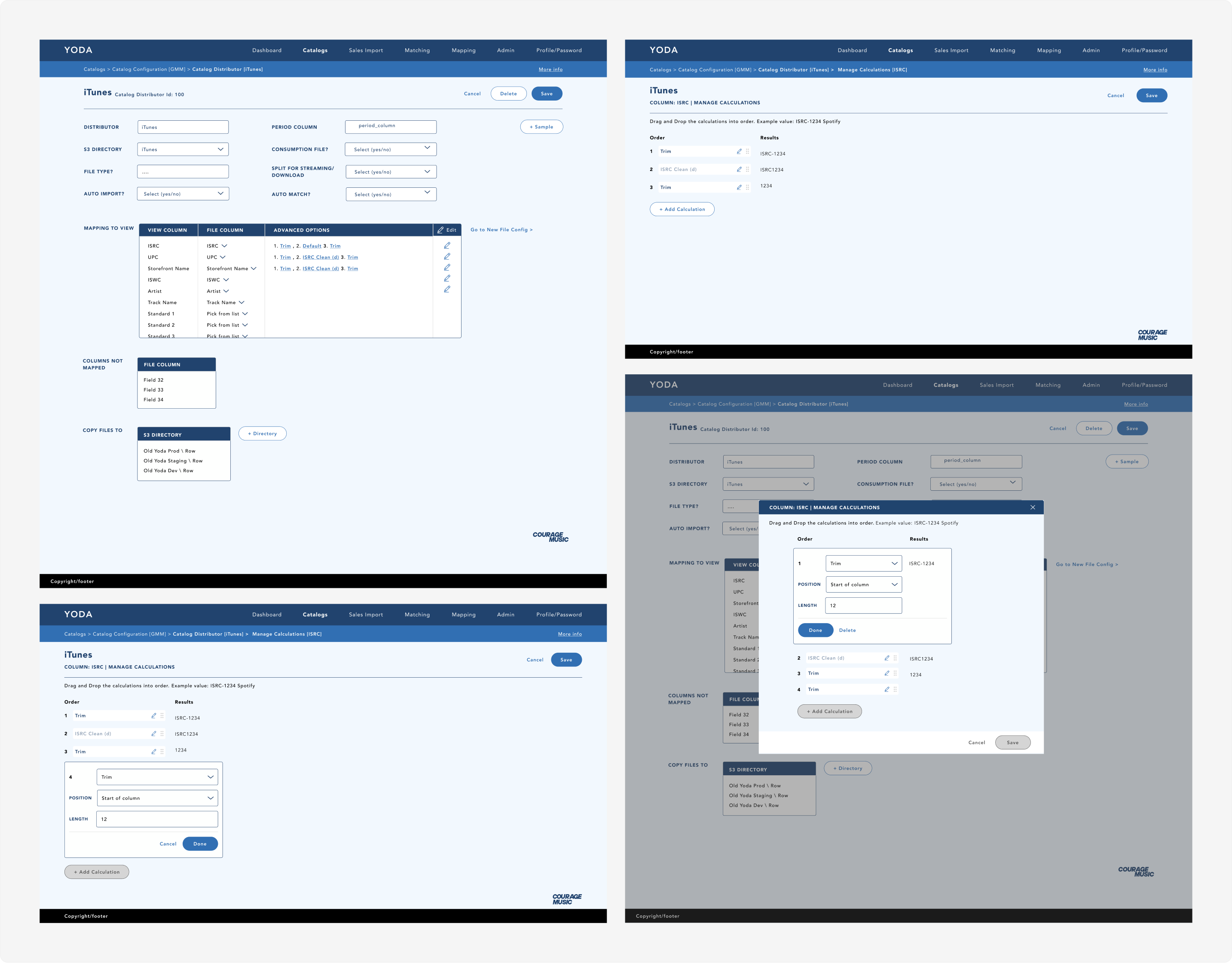
Once the team could see the platform coming to life in Figma, buy-in increased dramatically. The designs served as a blueprint for development, helping the team move beyond their spreadsheet past into something modern and usable. The project continued beyond my time on it, but we successfully got Yoda off the ground and into production.


This was one of the more unique projects I’ve worked on. Converting Excel wireframes into a functional, scalable product was a first, and doing it in a space as niche and data-heavy as music rights management added layers of complexity. It was a great learning experience in adapting to constraints, advocating for usability, and designing with empathy in a high-friction environment.